
Hawksbill Sea Turtle
Some species disappear quietly, almost unnoticed. The Hawksbill Sea Turtle reminds us how fragile life becomes when ecosystems are pushed beyond their limits.
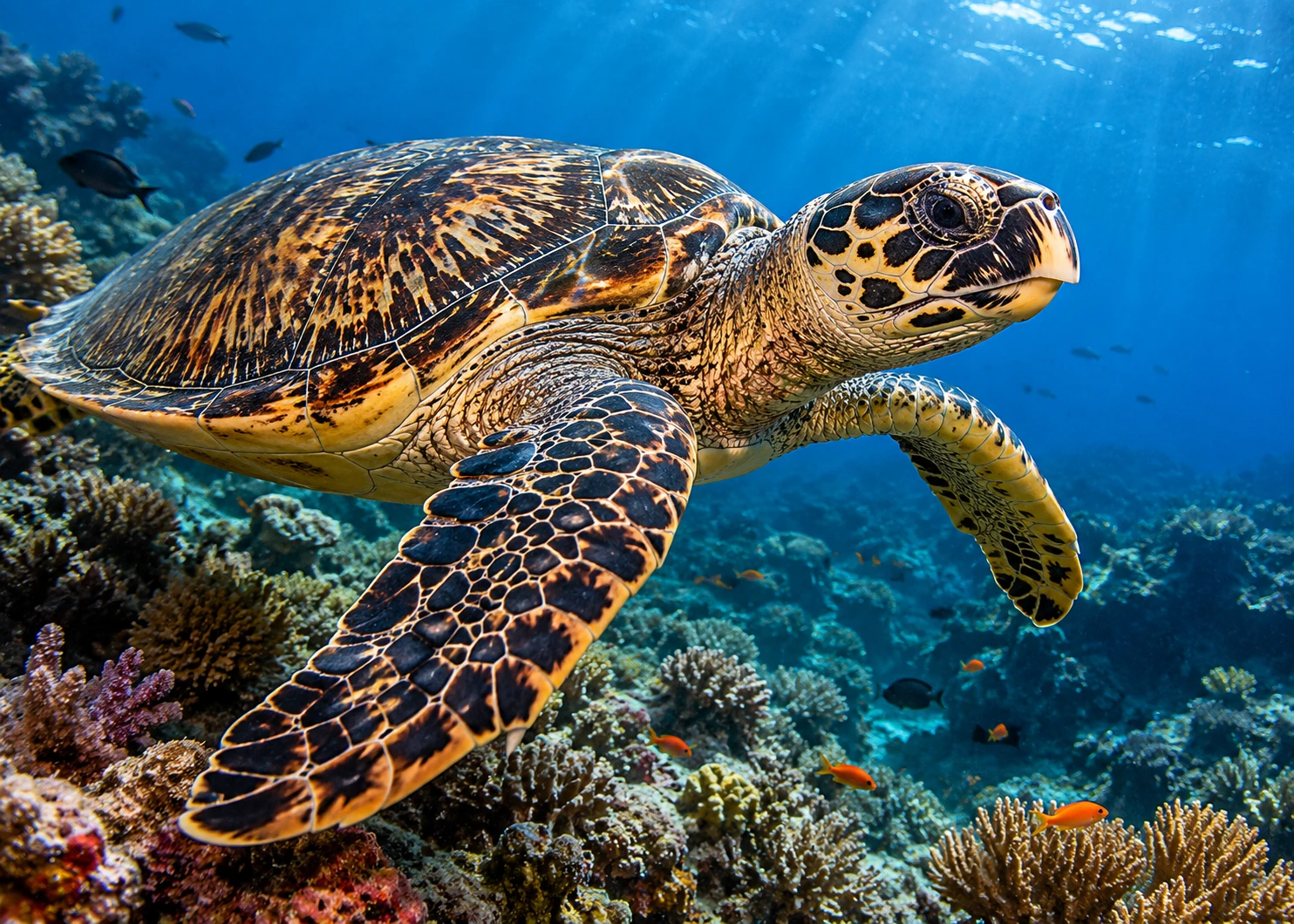
Hawksbill Sea Turtle
Eretmochelys imbricata
The hawksbill sea turtle is one of the most distinctive marine reptiles on Earth, recognized by its beautifully patterned shell and narrow, curved beak. Found throughout tropical oceans, this ancient species has inhabited the world’s seas for millions of years and remains an essential part of coral reef ecosystems.
Unlike many other sea turtles, hawksbills primarily feed on sponges, helping maintain the delicate balance of coral reefs. By controlling sponge populations, they create space for corals to grow and thrive, supporting some of the most biodiverse marine habitats on the planet.
Despite their ecological importance, hawksbill turtles face numerous threats. Illegal wildlife trade, accidental capture in fishing gear, coastal development, plastic pollution, and climate change have caused dramatic population declines across much of their historic range.
Today, the species is classified as Critically Endangered. Although conservation programs have helped protect important nesting beaches and feeding grounds, many populations remain fragile and continue to face significant pressure from human activity.
The survival of the hawksbill sea turtle is closely connected to the future of coral reefs. Protecting this remarkable species helps preserve entire marine ecosystems that support thousands of other forms of life and provide resources for coastal communities around the world.
Extinction is permanent.
Every endangered species is part of a much larger story. They regulate ecosystems, support biodiversity, and help maintain the balance of life. Protecting them means protecting the future of our planet.
Explore More Species