
Orca
Some species disappear quietly, almost unnoticed. The Orca reminds us how fragile life becomes when ecosystems are pushed beyond their limits.
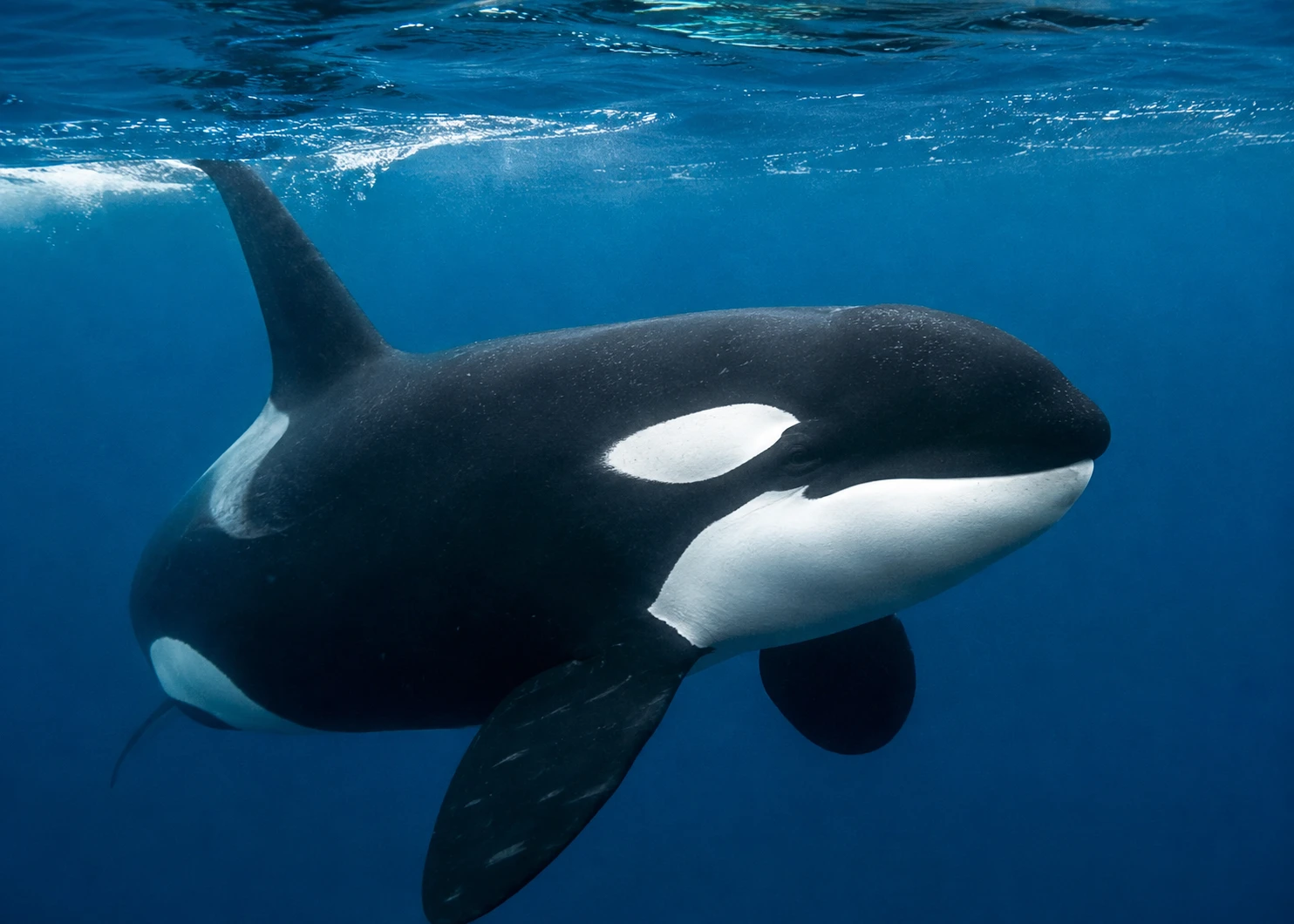
Orca
Orcinus orca
The orca, also known as the killer whale, is the largest member of the dolphin family and one of the ocean’s most intelligent predators. Found in every ocean on Earth, from the icy waters of the Arctic to tropical seas, orcas have developed complex social structures and hunting strategies that rival those of any animal on the planet.
Living in tightly bonded family groups known as pods, orcas communicate through unique vocalizations and pass knowledge from one generation to the next. Different populations have developed distinct cultures, diets, and behaviors, making them one of the most fascinating marine species ever studied.
Although some populations remain relatively stable, others face growing threats from pollution, declining prey availability, underwater noise, habitat degradation, and climate change. In certain regions, reductions in fish populations have placed increasing pressure on local orca communities.
As apex predators, orcas play a crucial role in maintaining balance within marine ecosystems. Their presence helps regulate food webs and serves as an indicator of overall ocean health.
Protecting orcas means protecting entire marine environments. Their survival reflects the condition of the oceans they inhabit and reminds us of the deep connections that link every species beneath the waves.
Extinction is permanent.
Every endangered species is part of a much larger story. They regulate ecosystems, support biodiversity, and help maintain the balance of life. Protecting them means protecting the future of our planet.
Explore More Species