
Blue Whale
Some species disappear quietly, almost unnoticed. The Blue Whale reminds us how fragile life becomes when ecosystems are pushed beyond their limits.
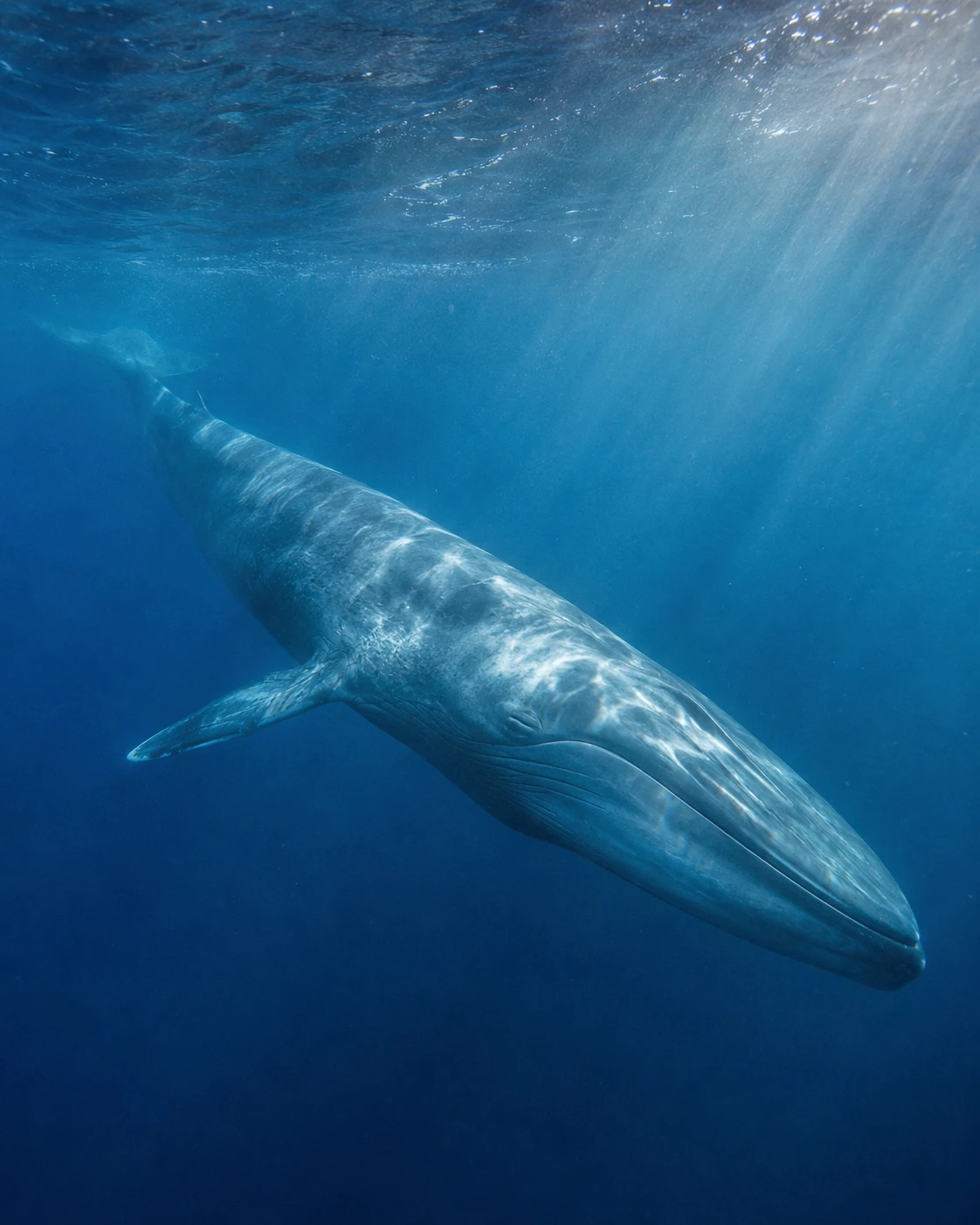
Blue Whale
Balaenoptera musculus
The blue whale is the largest animal known to have ever existed on Earth, reaching lengths of over 30 meters and weighing as much as 180 tonnes. Despite its immense size, this marine giant feeds primarily on tiny krill, filtering vast amounts of seawater through baleen plates.
Once abundant across the world’s oceans, blue whale populations were pushed to the brink of collapse by industrial whaling.
Although commercial whaling has largely ended, the species continues to face modern threats including ship strikes, entanglement in fishing gear, underwater noise pollution, climate-driven ecosystem disruption, and changing prey availability.
For an animal of such extraordinary scale, survival has become unexpectedly fragile.
Blue whales are more than icons of marine life.
They play an important ecological role in ocean nutrient cycling and are part of the delicate balance that sustains marine ecosystems.
Protecting the blue whale means protecting the health of the oceans themselves.
Extinction is permanent.
Every endangered species is part of a much larger story. They regulate ecosystems, support biodiversity, and help maintain the balance of life. Protecting them means protecting the future of our planet.
Explore More Species